

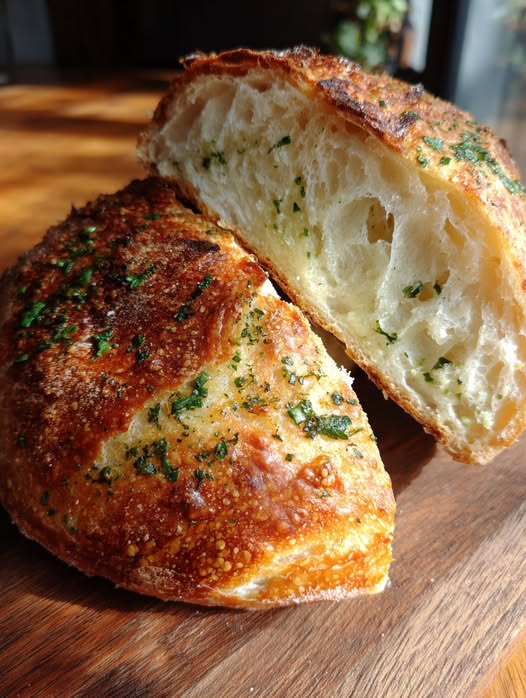
Ingredients You Will Need
Here are all the ingredients you will need for this flavorful loaf. Make sure your sourdough starter is active and bubbly before you begin.
For the Dough
-
500 grams bread flour
-
350 grams water (room temperature)
-
100 grams active sourdough starter
-
10 grams salt
-
1 tablespoon olive oil
For the Garlic and Herb Mixture
-
4 cloves garlic (finely minced or crushed)
-
1 tablespoon fresh rosemary (chopped)
-
1 tablespoon fresh thyme (chopped)
-
1 tablespoon fresh parsley (chopped)
-
2 tablespoons olive oil
-
1 teaspoon sea salt
You can also use dried herbs if fresh ones are not available. In that case, use one teaspoon of each dried herb instead of one tablespoon.
Step by Step Method
Step 1: Mix the Dough
In a large mixing bowl, combine the flour and water. Mix until no dry flour remains. The dough will be sticky at this stage, and that is normal. Cover the bowl with a towel and let it rest for about 45 minutes. This rest period helps the flour absorb water and makes the dough easier to handle.
Step 2: Add the Sourdough Starter and Salt
After resting, add your active sourdough starter and salt to the dough. Mix well using your hands or a spoon until everything is evenly combined. You can also drizzle a little olive oil to prevent the dough from sticking too much to your hands. The dough will start to come together and feel smoother as you mix.
Step 3: Begin the Stretch and Fold Process
Once the dough is mixed, it is time to build structure. Wet your hands and grab one side of the dough, stretch it upward, and fold it over itself. Turn the bowl slightly and repeat the process about four times. This process replaces kneading and helps create a good gluten structure. Let the dough rest for 30 minutes and repeat the stretch and fold process two to three more times over the next two hours.
Step 4: Prepare the Garlic and Herb Mixture
While your dough rests, prepare the flavor mix. In a small pan, heat olive oil over low heat. Add the minced garlic and cook gently until fragrant but not brown. Add the chopped herbs and sea salt, then remove from heat. Let it cool slightly before using. The smell will be amazing and this mixture will give your bread its signature flavor.
Step 5: Incorporate the Garlic and Herbs into the Dough
After the final stretch and fold, gently spread your dough on a clean surface. Drizzle the cooled garlic and herb mixture on top. Fold the dough from each side to trap the herbs inside. Try not to press too hard; you want to keep the air bubbles inside for a soft crumb. The herbs will spread through the dough as you fold and shape it later.
Step 6: Bulk Fermentation
Place the dough back in the bowl, cover it, and let it ferment at room temperature for about 4 to 6 hours, depending on the temperature of your kitchen. The dough should rise and become airy. You can tell it is ready when it has doubled in size and feels light when you touch it.
Step 7: Shape the Dough
Lightly flour your work surface. Turn out the dough and gently shape it into a round or oval loaf. You can do this by folding the edges toward the center and then flipping it seam-side down. Use your hands to tighten the shape slightly. Place the shaped dough in a floured proofing basket or bowl lined with a towel.
Step 8: Final Proofing
Cover the dough and place it in the refrigerator overnight, or for at least 8 hours. This slow fermentation develops more flavor and gives the bread a beautiful texture. If you prefer, you can also let it proof at room temperature for 1 to 2 hours, but the overnight method gives a better result.
Step 9: Preheat the Oven and Bake
When ready to bake, preheat your oven to 230°C (450°F) with a Dutch oven inside. Once it is hot, carefully place your dough inside the Dutch oven using parchment paper. Score the top with a sharp knife to help it expand while baking. Cover with the lid and bake for 25 minutes. Then remove the lid and bake for another 20 minutes until the crust turns golden brown and crisp.
Step 10: Cool and Serve
After baking, remove the bread from the oven and let it cool completely on a wire rack before slicing. This waiting period helps the crumb set properly. Once cool, slice it and enjoy the beautiful aroma and flavor of garlic and herbs.
Why This Recipe Is Special
This garlic and herb sourdough bread is more than just a loaf; it is a wholesome experience. The combination of natural fermentation, herbs, and garlic makes it both flavorful and nutritious. Sourdough bread is known for being easier to digest because the long fermentation process breaks down gluten and phytic acid. This means it can be gentler on the stomach compared to regular bread.
The addition of garlic not only enhances flavor but also adds health benefits. Garlic has natural antibacterial and antiviral properties that help boost immunity. Fresh herbs like rosemary, thyme, and parsley bring a refreshing taste and are packed with antioxidants that support good health. Together, these ingredients create a bread that tastes amazing and supports your body too.
This recipe is also special because it encourages mindfulness and patience. Making sourdough requires time and care, but the reward is worth it. The process teaches you to slow down, appreciate the smell of rising dough, and enjoy the art of baking. The result is a loaf full of character, flavor, and warmth that can easily become a family favorite.
Extra Tips for Better Taste
-
Use Fresh Herbs When Possible
Fresh herbs give a brighter, more vibrant flavor compared to dried ones. If you can, use garden-fresh rosemary, thyme, and parsley. -
Try Roasted Garlic
If you want a milder, sweeter garlic flavor, roast the garlic cloves before mixing them into the dough. Roasted garlic adds a deep caramelized note that makes the bread taste gourmet. -
Experiment with Cheese
For a richer version, sprinkle grated parmesan or cheddar inside the dough while folding in the herbs. It melts beautifully and gives a delicious twist. -
Play with Different Herbs
Do not limit yourself to the usual herbs. You can try basil, oregano, dill, or even chives to create your own signature flavor. -
Add a Touch of Butter After Baking
Once the bread comes out of the oven, brush the top with melted butter or olive oil. This gives it a lovely shine and keeps the crust slightly soft. -
Serve It Warm
This bread tastes best when slightly warm. Heat the slices for a few minutes in the oven before serving to bring out the aroma and make the crust crisp again. -
Perfect Pairings
Enjoy this bread with soups, salads, or pasta. It also makes a perfect base for garlic bread, bruschetta, or a sandwich filled with fresh vegetables and cheese.
Final Thoughts
Baking garlic and herb sourdough bread is one of those simple joys that never gets old. Every step, from feeding your starter to slicing the finished loaf, connects you to the process in a beautiful way. The mix of earthy herbs and rich garlic inside a soft, tangy sourdough crumb is something truly satisfying. It is comfort food, a homemade gift, and a healthy treat all at once.
This bread is perfect for any season and any occasion. You can make it for a family dinner, take it to a picnic, or simply bake it to fill your home with the smell of fresh bread. Each loaf is unique, and with time, you will find your rhythm and favorite combination of herbs. Once you start baking it, it will become a regular part of your kitchen routine.
So take out your sourdough starter, gather your ingredients, and begin this baking adventure. The process is slow but rewarding, and when you pull that golden loaf from the oven, you will know it was all worth it.
Nutrition Details
| Nutrient | Per Loaf (Approx.) | Per Serving (1 slice) |
|---|---|---|
| Calories | 1800 kcal | 150 kcal |
| Carbohydrates | 330 g | 27 g |
| Protein | 55 g | 4.5 g |
| Fat | 32 g | 2.7 g |
| Fiber | 12 g | 1 g |
| Sugar | 3 g | 0.25 g |
| Sodium | 2200 mg | 180 mg |
| Vitamin C | 4 mg | 0.3 mg |
| Iron | 14 mg | 1.2 mg |
| Calcium | 110 mg | 9 mg |
Note: These values are approximate and may vary depending on your ingredients and portion size.
Disclaimer
This recipe is meant for general enjoyment and basic nutritional guidance. Everyone’s body is different, and dietary needs can vary. If you have food allergies, sensitivities, or health conditions, please check with your healthcare provider or nutritionist before making changes to your diet. Always use ingredients that suit your personal health and preferences.
