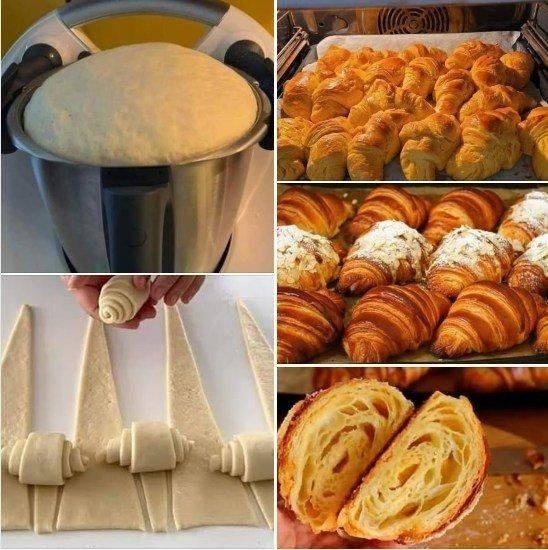

There is something incredibly special about homemade croissants. Their golden, beautifully browned exterior, delicate layers, buttery aroma, and soft, airy center make them one of the most satisfying pastries to bake from scratch. While croissants do require some patience, the process is absolutely worth it when you pull a tray of freshly baked pastries from the oven and see all those beautiful flaky layers. This classic homemade croissant recipe will guide you through preparing the dough, layering it with butter, shaping the croissants, proofing them, and baking them until perfectly golden and crisp.
Ingredients
For the croissant dough, you will need 4 cups all-purpose or bread flour, ¼ cup granulated sugar, 2 teaspoons instant yeast, 1½ teaspoons salt, 1¼ cups cold or cool whole milk, 2 tablespoons unsalted butter melted and slightly cooled, and 1 teaspoon vanilla extract if you prefer a slightly sweet pastry.
For the butter layer, use 1 cup unsalted European-style butter if available. The butter should be cold but flexible enough to roll without breaking. For the egg wash, you will need 1 large egg and 1 tablespoon milk or water. Using a good-quality butter is especially important because butter provides most of the flavor and helps create the distinct flaky layers.
Prepare the Dough
Begin by combining the flour, sugar, instant yeast, and salt in a large mixing bowl. Make sure the salt and yeast are distributed evenly throughout the flour. Add the milk and melted butter, then mix until a shaggy dough begins to form.
Transfer the dough to a lightly floured work surface and knead gently for approximately 5 to 7 minutes. The dough should become smooth and elastic but does not need to be kneaded as extensively as bread dough. You can also use a stand mixer fitted with a dough hook and mix on low to medium speed until the dough becomes smooth.
Shape the dough into a rectangle or ball and place it in a lightly greased bowl. Cover it with plastic wrap or a clean kitchen towel and allow it to rest at room temperature for about 1 to 1½ hours, or until it becomes noticeably puffy.
After the first rise, gently press the dough down to remove excess air. Shape it into a flat rectangle, wrap it tightly, and refrigerate it for at least 1 hour or preferably overnight. Chilling the dough makes the lamination process much easier.
Prepare the Butter Block
While the dough chills, prepare the butter block. Place the cold butter between two sheets of parchment paper. Using a rolling pin, gently pound and roll the butter into a flat rectangle approximately 8 by 5 inches.
The butter should be firm but flexible. It needs to have a similar consistency to the chilled dough. If the butter is too hard, it can break through the dough during rolling. If it becomes too soft, it can blend into the dough instead of creating separate layers.
Once the butter block is shaped, refrigerate it until you are ready to laminate the dough.
Begin the Lamination
Place the chilled dough on a lightly floured surface and roll it into a rectangle approximately twice the length of your butter block. Place the butter in the center of the dough and fold the dough over it, completely enclosing the butter.
Press the edges gently to seal the butter inside. Make sure there are no open areas where butter can escape during rolling.
Roll the dough carefully into a long rectangle. Apply even pressure with the rolling pin and work slowly. If the dough becomes too soft or difficult to handle, place it in the refrigerator for 20 to 30 minutes before continuing.
Once the dough is long enough, fold it into thirds like a letter. This is the first fold. Wrap the dough and refrigerate it for about 30 to 45 minutes.
Repeat the rolling and folding process two more times, chilling the dough between each fold. These folds create the many thin layers of butter and dough that give croissants their famous flaky texture.
The most important rule during lamination is to keep the butter cold. If the butter starts melting or leaking from the dough, stop rolling and refrigerate the dough until everything becomes firm again.
Roll and Cut the Dough
After the final fold, refrigerate the dough for at least 1 hour. You can also leave it refrigerated overnight.
Place the chilled dough on a lightly floured surface and roll it into a long, thin rectangle approximately ¼ inch thick. Trim the edges if necessary to create a neat rectangle.
Using a sharp knife or pizza cutter, divide the dough into long triangles. Each triangle should have a wide base and a pointed tip. Make a small slit in the center of the wide end of each triangle.
Starting at the wide end, gently roll each triangle toward the pointed tip. Stretch the dough slightly as you roll, but avoid squeezing it too tightly. The finished croissant should have several visible turns and the pointed tip should rest underneath the pastry.
Place the shaped croissants on parchment-lined baking sheets, leaving plenty of space between them because they will expand during proofing and baking.
Proof the Croissants
Cover the shaped croissants loosely with plastic wrap or a clean kitchen towel. Let them proof at room temperature for approximately 1½ to 2½ hours.
The exact time will depend on the temperature of your kitchen. The croissants should become noticeably larger, soft, and slightly wobbly when the baking sheet is gently moved.
Do not rush this step. Proper proofing is essential for creating light, airy croissants. If they are underproofed, they can become dense inside. Avoid placing them somewhere extremely hot because the butter can melt out of the layers.
Apply the Egg Wash
Once the croissants are properly proofed, preheat your oven to 400°F (200°C).
Whisk together the egg and milk or water to make an egg wash. Using a pastry brush, gently brush the egg wash over the surface of each croissant.
Try not to let too much egg wash drip onto the baking sheet because it can stick and affect the pastry’s ability to rise.
Bake the Croissants
Place the baking sheet in the preheated oven and bake for approximately 18 to 25 minutes, depending on the size of the croissants.
They should rise beautifully and develop a deep golden-brown color. The outside should look crisp and flaky while the inside should be light and airy.
Avoid removing them too early. A properly baked croissant should have a rich golden color rather than a pale appearance.
Once baked, remove the croissants from the oven and allow them to cool on the baking sheet for several minutes. Transfer them to a wire rack and let them cool slightly before serving.
Tips for Perfect Croissants
Keep everything cold throughout the lamination process. Warm butter is one of the biggest causes of unsuccessful croissants because it can blend into the dough instead of forming distinct layers.
Do not rush the resting and chilling periods. Croissant dough needs time to relax between folds, making it easier to roll and helping prevent the dough from shrinking.
Use a sharp knife when cutting the triangles. A dull knife can crush the layers and make shaping more difficult.
Do not overproof the croissants. They should look puffy and feel light, but they should still have enough structure to rise in the oven.
For the best flavor, refrigerate the dough overnight during the initial stage. The longer resting time allows the dough to develop a deeper flavor.
Serving Ideas
Freshly baked croissants are delicious on their own with butter, jam, honey, or powdered sugar. They are also wonderful served alongside coffee, tea, hot chocolate, or fresh fruit.
For a savory breakfast, slice the croissants and fill them with scrambled eggs, cheese, turkey, ham, or vegetables. For a sweet version, fill them with chocolate, almond cream, pastry cream, or fruit preserves before baking.
You can also make pain au chocolat by placing pieces of chocolate near the wide end of the dough triangle before rolling.
Storage
Fresh croissants are best enjoyed on the day they are baked, when the exterior is crisp and the inside is soft and buttery. Store leftover croissants in an airtight container at room temperature for up to 2 days.
To refresh them, place them in a preheated oven at 325°F (165°C) for approximately 5 to 8 minutes. This helps restore their crisp exterior.
Unbaked shaped croissants can also be frozen. Place them on a baking sheet until firm, then transfer them to a freezer-safe container. When ready to bake, allow them to thaw and proof completely before applying the egg wash and baking.
Final Thoughts
Making homemade croissants takes a little patience, but the result is incredibly rewarding. The combination of a lightly sweet dough, rich butter, careful folding, and proper proofing creates those beautiful layers that make classic croissants so special. Once baked, they become golden, crisp, flaky, and wonderfully buttery on the outside while remaining soft and airy inside.
Whether you enjoy them plain, filled with chocolate, served with jam, or transformed into a savory breakfast sandwich, homemade croissants are a delicious treat for any occasion. With practice, you will become more comfortable with the lamination process and learn exactly how cold the dough and butter should be. Once you master this recipe, you can use the same technique to create a variety of bakery-style pastries right in your own kitchen.