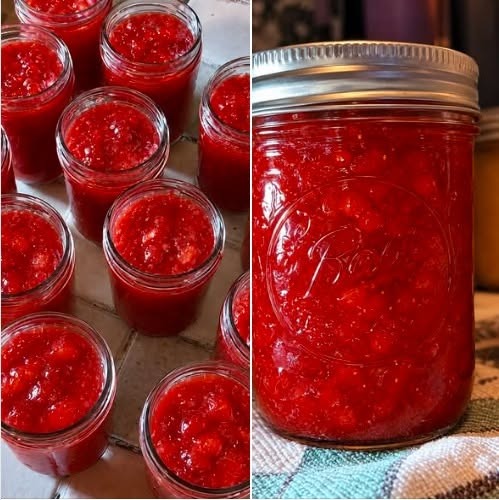

Nothing beats the taste of homemade strawberry jam! Made with fresh strawberries, sugar, and a little lemon juice, this delicious jam is sweet, fruity, and perfect for spreading on toast, biscuits, pancakes, and homemade bread. It requires only a few simple ingredients and is a wonderful way to enjoy the fresh flavor of strawberries.
Whether you’re making it for your family, sharing it with friends, or preparing homemade gifts, this easy strawberry jam recipe is sure to become a favorite.
Ingredients
- 2 pounds (900 g) fresh strawberries, washed and hulled
- 4 cups granulated sugar
- 2 tablespoons fresh lemon juice
- 1 teaspoon lemon zest (optional)
- 1 packet powdered fruit pectin (optional, for a firmer set; follow the package directions)
Equipment Needed
- A large, heavy-bottomed saucepan
- A wooden spoon or heat-resistant spatula
- A potato masher or fork
- Clean glass jars with lids
- A ladle
- A plate for testing the jam’s consistency
Instructions
Step 1: Prepare the Strawberries
Wash the strawberries thoroughly under cool running water and remove the green tops. Pat them dry with a clean towel. Cut larger berries into smaller pieces to help them cook evenly.
Place the strawberries in a large bowl and gently mash them with a potato masher or fork. You can leave a few small chunks if you enjoy a textured jam. For a smoother consistency, mash the fruit more thoroughly.
Step 2: Combine the Ingredients
Transfer the mashed strawberries to a large saucepan. Add the granulated sugar and fresh lemon juice. If desired, add a little lemon zest for extra freshness.
Stir everything together until the strawberries are evenly coated with sugar. Let the mixture sit for about 10 minutes to allow the fruit to release some of its natural juices.
Step 3: Cook the Strawberry Mixture
Place the saucepan over medium heat and stir gently until the sugar dissolves. Increase the heat and bring the mixture to a full rolling boil, stirring frequently to prevent sticking.
Allow the jam to boil until it thickens, usually around 20–35 minutes, depending on the water content of the fruit and the width of your saucepan. If using powdered pectin, follow its package instructions for the correct cooking time and ingredient order.
Be careful because hot jam can bubble and splatter. Use a long-handled spoon and avoid touching the hot mixture.
Step 4: Test the Consistency
To check whether the jam is ready, place a small plate in the freezer for several minutes. Spoon a little hot jam onto the chilled plate and wait about 30 seconds.
Push the jam gently with your finger. If it wrinkles slightly and does not immediately run back together, it may be ready. If it remains very runny, continue cooking briefly and test again.
Remember that strawberry jam becomes thicker as it cools, so avoid overcooking it in an attempt to make it extremely thick while hot.
Step 5: Prepare the Jars
Wash the glass jars and lids thoroughly with hot, soapy water and rinse well. If you plan to store the jam at room temperature, the jars must be prepared and processed using a tested canning recipe and procedure.
For refrigerator or freezer jam, use clean containers suitable for the intended storage method. Allow the containers to cool appropriately before filling if required by the container manufacturer.
Step 6: Fill the Jars
Remove the saucepan from the heat and let the bubbling settle briefly. Carefully ladle the hot jam into the prepared jars, leaving the headspace specified by your tested canning recipe.
Wipe the jar rims clean and secure the lids according to the directions for your chosen storage method.
Important: Simply pouring hot jam into jars and closing the lids does not make it safe for shelf storage. For pantry storage, use a tested strawberry jam canning recipe and process filled jars in a boiling-water canner for the specified time, adjusting for altitude. Otherwise, refrigerate or freeze the jam.
Step 7: Cool and Store
For refrigerator jam, let the jars cool safely, then refrigerate promptly. Use within about three weeks for best quality, or follow a tested recipe’s storage guidance. Freeze extra jam in freezer-safe containers, leaving ro