
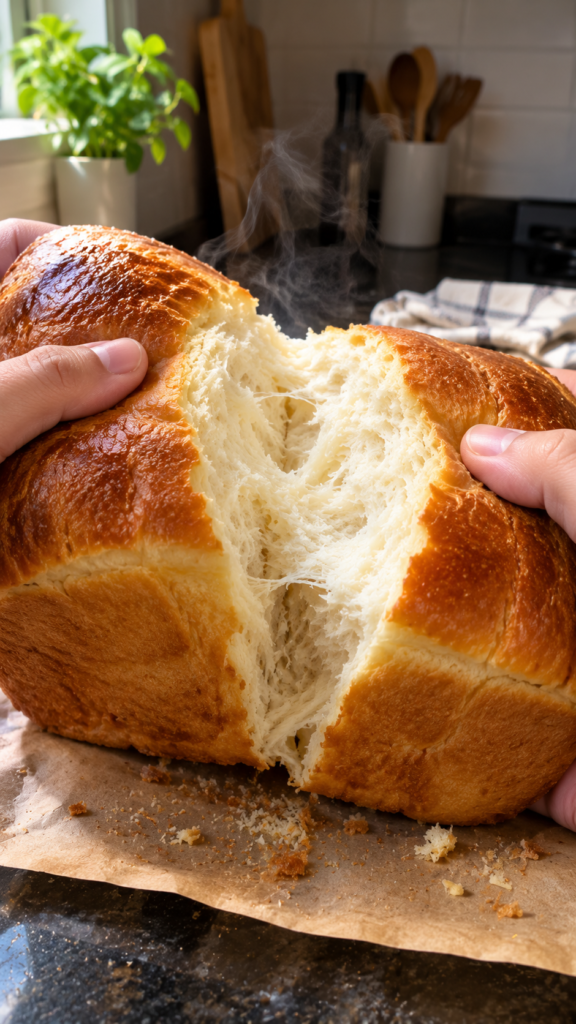

There is nothing quite like the smell of freshly baked bread filling your kitchen. This soft, fluffy homemade bread has a beautiful golden-brown crust and a tender, pillowy interior that pulls apart in delicate strands. The first time you tear into a warm loaf and see that soft, fluffy center, you will understand why homemade bread is so special.
This recipe makes a rich, slightly sweet loaf that is perfect for breakfast, afternoon snacks, sandwiches, or serving alongside your favorite meals. Enjoy a slice with butter and jam, dip it into a warm bowl of soup, or toast it the next morning for a simple homemade treat.
The best part? You do not need to be a professional baker to make it. With simple ingredients, a little patience, and the right technique, you can bake a beautiful loaf right in your own kitchen.
Ingredients
-
4 cups (500 g) all-purpose flour or bread flour
-
2¼ teaspoons instant yeast (1 packet)
-
¼ cup (50 g) granulated sugar
-
1 teaspoon salt
-
1 cup (240 ml) warm milk
-
2 large eggs, at room temperature
-
¼ cup (57 g) unsalted butter, softened
-
1 tablespoon neutral oil, for greasing the bowl
-
1 tablespoon milk or 1 beaten egg, for brushing the top
Instructions
Step 1: Prepare the Yeast Mixture
Pour the warm milk into a large mixing bowl. The milk should feel comfortably warm, not hot. Add the sugar and instant yeast, then stir gently. Let the mixture sit for about 5 minutes if you want to check that the yeast is active. It may begin to look slightly foamy.
If you are using instant yeast, you can also mix it directly with the flour and add the milk afterward.
Step 2: Mix the Dough
Add the eggs and stir until combined. Gradually add the flour and salt, mixing with a wooden spoon or dough hook until a rough dough forms.
The dough may look slightly sticky at first. That is normal for soft, fluffy bread. Avoid adding too much extra flour because a stiff dough can produce a denser loaf.
Step 3: Knead Until Smooth
Knead the dough for approximately 8–10 minutes by hand or 6–8 minutes in a stand mixer on low to medium speed.
Once the dough begins to look smoother, add the softened butter a little at a time. Continue kneading until the butter is fully incorporated and the dough becomes soft, elastic, and slightly tacky.
To test it, gently stretch a small piece between your fingers. If it stretches into a thin membrane without tearing immediately, the dough has developed good gluten structure.
Step 4: Let the Dough Rise
Lightly grease a clean bowl with oil and place the dough inside. Turn it once to coat the surface, then cover the bowl with a clean kitchen towel or plastic wrap.
Leave it in a warm, draft-free place for about 1–1½ hours, or until it has roughly doubled in size. The exact time depends on the temperature of your kitchen.
Do not rush this step. A good first rise helps create the soft, airy texture that makes homemade bread so enjoyable.
Step 5: Shape the Loaf
Gently press the dough to release some of the larger air bubbles. Transfer it to a lightly floured work surface.
Divide the dough into three equal portions. Shape each portion into a smooth ball or short log, then arrange the pieces side by side in a greased loaf pan. You can also shape the dough into one large loaf if you prefer.
Cover the pan loosely and let the dough rise again for 30–60 minutes, until it looks puffy and has risen noticeably above its original size.
Step 6: Brush the Top
Preheat your oven to 350°F (175°C).
Brush the top of the risen loaf gently with milk for a softer golden crust, or use beaten egg for a deeper, shinier finish.
Be gentle when brushing so you do not deflate the dough.
Step 7: Bake Until Golden
Place the loaf in the preheated oven and bake for approximately 30–35 minutes, depending on the shape and size of your pan.
The top should become beautifully golden brown, and the loaf should sound slightly hollow when tapped. If the top browns too quickly, loosely cover it with foil for the remaining baking time.
For a reliable doneness check, the center of an enriched loaf should reach approximately 190°F (88°C).
Step 8: Cool and Enjoy
Remove the bread from the oven and allow it to rest in the pan for about 5–10 minutes. Carefully transfer it to a wire rack.
Let the loaf cool for at least 20–30 minutes before tearing or slicing. Although warm bread smells irresistible, cutting too early can compress its delicate interior.
Once ready, pull the loaf apart and enjoy those soft, fluffy strands. Serve with butter, honey, fruit jam, or your favorite spread.
Tips for the Softest Homemade Bread
-
Measure the flour carefully: Too much flour can make the bread dry and heavy. A kitchen scale gives the most consistent results.
-
Use room-temperature eggs: They blend more easily into the dough.
-
Add the butter after the dough begins forming: This helps the flour develop structure before the fat is fully incorporated.
-
Allow enough rising time: Watch the dough rather than relying only on the clock.
-
Avoid overbaking: Excessive baking can dry out the loaf.
-
Store it properly: Once completely cool, keep the bread in an airtight bag or container at room temperature for up to 3 days.
Delicious Ways to Serve This Bread
This loaf is wonderful straight from the oven with a little butter. For breakfast, toast thick slices and spread them with honey, jam, or peanut butter. For a sweet treat, sprinkle a little cinnamon sugar over a buttered slice.
You can also use it to make French toast, bread pudding, or soft sandwiches. Its slightly sweet flavor pairs beautifully with both sweet and savory fillings.
If you want to prepare it ahead, let the baked loaf cool completely, wrap it tightly, and freeze it for up to 2 months. Thaw at room temperature and warm it briefly in the oven before serving.
Frequently Asked Questions
Can I make this bread without a stand mixer?
Yes! Knead the dough by hand on a clean work surface. It may take a little longer, but you can still achieve a soft, elastic dough.
Why did my bread turn out dense?
Common reasons include adding too much flour, using inactive yeast, insufficient kneading, or not allowing the dough enough time to rise.
Can I use active dry yeast instead of instant yeast?
Yes. Use the same amount and dissolve it in the warm milk with the sugar first. Allow it to become foamy before continuing.
Can I make the dough the night before?
Yes. After kneading, cover the dough and refrigerate it overnight. The next day, let it warm up enough to shape comfortably, then complete the second rise before baking. Cold dough may require additional rising time.
How do I keep the bread soft?
Avoid adding excess flour, knead until the dough is elastic, and store the completely cooled loaf in an airtight container.
A Homemade Bread Recipe Worth Sharing
Homemade bread does not need to be complicated to be delicious. With its golden crust, soft center, and beautifully fluffy texture, this loaf is a wonderful addition to your kitchen. Whether you bake it for your family, share it with friends, or save a few slices for breakfast, it is the kind of recipe you will want to make again.
Once you experience the pleasure of pulling apart a freshly baked loaf, store-bought bread may not feel quite the same!
Would you try this soft, fluffy homemade bread? Let me know in the comments, and share this recipe with someone who loves freshly baked bread! 🍞