
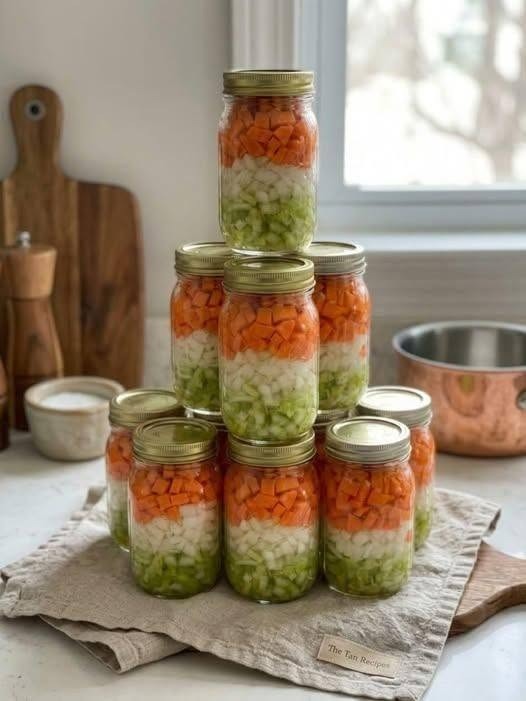

If you love having fresh vegetables ready to use whenever you are cooking, this Homemade Chopped Vegetable Mix is a simple and practical recipe to keep in your refrigerator or freezer. Made with colorful carrots, crisp celery, and fresh onion, this versatile vegetable mixture can save time on busy days and makes a wonderful base for soups, stews, sauces, casseroles, rice dishes, pasta, and many other homemade meals. The vegetables are finely chopped and stored in jars or airtight containers, making it easy to scoop out exactly what you need whenever you’re ready to cook.
This vegetable mix is similar to the classic combination often used as a flavor base in many recipes. Carrots provide natural sweetness, celery adds a fresh savory flavor, and onion brings richness and aroma. Together, these simple vegetables create a balanced mixture that can be cooked with butter, olive oil, or your favorite cooking oil before adding meat, beans, tomatoes, broth, or other ingredients. Preparing a batch in advance means you can reduce chopping time during the week and get meals started much faster.
The recipe is especially useful for meal preparation. Instead of washing, peeling, and chopping vegetables every time you make soup or stew, you can prepare several jars at once and keep them ready to use. The colorful layers also make the jars look beautiful, but the main purpose is convenience and easy meal preparation.
Why You’ll Love This Vegetable Mix
This recipe uses inexpensive and easily available vegetables, requires very little preparation, and can be customized according to your preferences. You can make a small batch for a few meals or prepare a larger quantity for future cooking.
The vegetable mixture is naturally versatile. You can sauté it as the first step of a soup, add it to ground beef or chicken, mix it into pasta sauce, or use it as a flavorful base for rice and grain dishes. It can also be combined with potatoes, tomatoes, lentils, beans, or herbs to create hearty meals.
Because fresh vegetables contain moisture and are low-acid foods, this recipe is best stored in the refrigerator for short-term use or frozen for longer storage. Do not store raw vegetables sealed in jars at room temperature unless you are following a tested pressure-canning recipe specifically designed for those vegetables.
Ingredients
4 large carrots
4 celery stalks
2 medium yellow onions
1 tablespoon lemon juice, optional for flavor
1 tablespoon olive oil, optional for cooking
½ teaspoon salt, optional
¼ teaspoon black pepper, optional
Fresh parsley or celery leaves, optional
You can adjust the quantities depending on how many jars or containers you want to prepare.
Kitchen Equipment
Sharp kitchen knife
Large cutting board
Vegetable peeler
Large mixing bowl
Clean glass jars or airtight food containers
Measuring spoons
Clean spoon
Labels and marker for storage dates
Preparing the Vegetables
Start by washing the carrots, celery, and onions thoroughly under cool running water. Peel the carrots and remove the ends. Trim the celery stalks and remove any damaged areas. Peel the onions and cut away the root and stem ends.
Pat the vegetables dry with a clean kitchen towel. Removing excess moisture helps maintain better texture during storage.
Cut the carrots, celery, and onions into small, evenly sized pieces. For a versatile cooking mixture, aim for pieces approximately ¼ inch in size. You can chop them slightly larger if you prefer more texture in soups and stews.
Try to keep the vegetables relatively uniform in size so they cook at approximately the same rate.
Combining the Vegetables
Place the chopped carrots, celery, and onions into a large mixing bowl. Gently toss them together until evenly distributed.
If desired, add a small amount of salt and black pepper. However, if you plan to use the vegetable mixture in many different recipes, it may be better to leave it unseasoned. This allows you to control the seasoning of each individual dish later.
Fresh parsley or finely chopped celery leaves can also be added for extra flavor, although they are completely optional.
Filling the Storage Jars
Make sure your glass jars or airtight containers are clean and completely dry. Spoon the chopped vegetable mixture into each container.
The vegetables can be layered attractively as shown in the photo, with green celery, white onion, and orange carrots creating beautiful colorful sections. However, you can also mix everything together before filling the containers. The flavor will be the same either way.
Do not tightly compress the vegetables. Leave a little space in each container, especially if you plan to freeze the mixture, because vegetables expand slightly as they freeze.
If using jars for refrigerator storage, leave enough room at the top so the vegetables can be easily removed with a spoon.
Refrigerator Storage
Place the filled containers in the refrigerator immediately after preparation. For the best quality, use the fresh chopped vegetable mixture within a few days.
Always check the vegetables before using them. If they develop an unusual smell, slimy texture, mold, or other signs of spoilage, discard them.
For longer storage, freezing is a better option.
Freezing Instructions
To freeze the vegetable mixture, divide it into convenient portions before placing it in freezer-safe containers or bags. Small portions are especially useful because you can remove only what you need for one recipe.
Remove as much excess air as possible from freezer bags before sealing. If using containers, leave some space at the top for expansion.
Label each container with the name and date. Store in the freezer and use within a few months for the best flavor and texture.
Frozen vegetables may become slightly softer after thawing, but this is not usually noticeable when they are cooked in soups, sauces, stews, or casseroles.
How to Use the Vegetable Mix
One of the best things about this homemade vegetable mixture is how many ways you can use it.
For a quick soup, sauté a portion of the vegetables in olive oil or butter for several minutes. Add broth, potatoes, tomatoes, beans, lentils, chicken, or noodles and simmer until everything is tender.
For a hearty stew, cook the vegetable mixture with beef, chicken, or mushrooms before adding broth and seasonings.
You can also use it as the foundation for pasta sauce. Sauté the vegetables until soft, then add crushed tomatoes, garlic, Italian herbs, and your choice of protein.
For rice dishes, cook the vegetables in a little oil before adding rice and broth. The vegetables will add extra flavor and color.
The mixture also works beautifully in casseroles, omelets, scrambled eggs, meatloaf, stuffed peppers, and homemade sauces.
Helpful Tips
Choose firm, fresh vegetables for the best texture and flavor. Avoid vegetables that are already soft or damaged.
Cut everything evenly so the vegetables cook at the same rate.
Keep the mixture relatively dry before storage. Excess water can cause the vegetables to become soggy and can contribute to freezer burn.
If you are preparing the mixture specifically for soups or sauces, you can chop the vegetables very finely. For roasted dishes or stews, slightly larger pieces work better.
Do not add too much salt before storage. Since this mixture can be used in many different recipes, it is easier to season the final dish.
Optional Additions
This basic vegetable mix can easily be customized. Add finely chopped bell peppers for extra color and sweetness. Garlic can be included if you know you’ll primarily use the mixture in savory recipes.
You can also add mushrooms, leeks, parsley, or green onions. For an Italian-inspired mixture, add a small amount of fresh parsley and basil. For a hearty soup base, include chopped potatoes, although potatoes are generally better added separately because their texture changes during storage.
If you prefer a spicy flavor, add a small amount of finely chopped jalapeño or red chili.
Important Food Storage Note
Although the vegetables can be placed into clean jars for refrigerator or freezer storage, they should not simply be sealed and stored at room temperature. Fresh carrots, celery, and onions are low-acid vegetables and are not safely preserved by ordinary water-bath canning.
For shelf-stable storage, use a scientifically tested pressure-canning recipe designed specifically for the ingredients and quantities you are using. Otherwise, keep this vegetable mixture refrigerated or frozen.
Frequently Asked Questions
Can I use frozen vegetables instead of fresh vegetables? Fresh vegetables provide the best texture for this preparation, but previously frozen vegetables can be used if you are preparing a mixture specifically for cooking.
Can I add garlic? Yes, but garlic changes the storage characteristics of the mixture. For the simplest storage, add fresh garlic when you actually cook your meal.
Can I freeze the vegetables without blanching? Yes. For a mixture intended primarily for soups, sauces, and cooked dishes, you can freeze the chopped vegetables directly. The texture may soften after freezing, but they will work very well in cooked recipes.
Can I cook the vegetables before storing them? Yes. You can lightly sauté the mixture, cool it completely, portion it, and freeze it. This creates a ready-to-use flavor base for soups and sauces.
How long can I keep the mixture? For best quality, use refrigerated chopped vegetables within a few days. For longer storage, freeze them in appropriate freezer-safe containers.
Final Thoughts
This Homemade Chopped Vegetable Mix is one of those simple kitchen preparations that can make everyday cooking much easier. With fresh carrots, celery, and onions prepared in advance, you always have a flavorful base ready for soups, stews, sauces, rice, pasta, casseroles, and countless other meals. The vegetables can be chopped in one preparation session, divided into convenient portions, and stored safely in the refrigerator or freezer. The colorful combination looks beautiful in glass jars, but its real benefit is the time it saves when you’re cooking. Prepare a batch at the beginning of the week, keep it properly chilled, and you’ll have a convenient homemade vegetable base ready whenever inspiration strikes.