

Homemade Lemon Curd is one of the most delicious ways to turn fresh lemons into something bright, creamy, sweet, and incredibly flavorful. With its beautiful golden-yellow color and rich citrus taste, lemon curd is perfect for spreading on toast, biscuits, scones, pancakes, waffles, muffins, and pastries. It can also be used as a filling for cakes, cupcakes, tarts, cookies, and other desserts. If you love fresh lemon flavor, this is one homemade recipe you will want to keep in your collection.
There is something special about making lemon curd at home. The flavor is much fresher and brighter than many store-bought versions, and the recipe requires only a handful of simple ingredients. Fresh lemons provide both the juice and the zest, while eggs, sugar, and butter create the smooth, rich texture that makes lemon curd so delicious.
To make homemade lemon curd, you will need fresh lemons, granulated sugar, eggs, butter, and a small pinch of salt. Freshly squeezed lemon juice is strongly recommended because it gives the curd a clean, natural citrus flavor. You will also want some finely grated lemon zest because the zest contains concentrated lemon oils that add even more fragrance and flavor.
Begin by washing the lemons thoroughly. Since you will be using the zest, it is important to clean the outside of the fruit before grating it. Use a fine grater or microplane to remove the yellow outer layer of the lemon. Try to avoid grating too deeply into the white part underneath the skin because the white pith can have a bitter taste.
After zesting the lemons, cut them in half and squeeze out the juice. Remove any seeds and strain the juice if necessary. Fresh lemon juice should have a bright, clean aroma and a pleasant balance of sweetness and tartness.
In a medium saucepan or heatproof bowl, combine the lemon juice, lemon zest, sugar, and eggs. Whisk everything together until the mixture is smooth and well combined. The sugar will begin dissolving into the lemon juice while the eggs provide the base for the creamy texture.
Place the mixture over low to medium-low heat. It is important not to use very high heat because the eggs can cook too quickly and become scrambled. Stir or whisk the mixture continuously as it heats.
As the mixture warms, it will gradually begin to thicken. Continue stirring and pay close attention to the bottom and sides of the saucepan. The lemon curd should become smooth and creamy rather than lumpy.
Once the mixture has thickened enough to coat the back of a spoon, remove it from the heat. The curd may still look slightly thinner than you want at this point, but remember that it will continue to thicken as it cools.
Add the butter a little at a time while the mixture is still warm. Stir until each piece melts completely and becomes incorporated into the curd. The butter gives the lemon curd its rich, silky texture and helps balance the sharpness of the lemon.
If you want an especially smooth lemon curd, strain the finished mixture through a fine-mesh sieve. This removes any small pieces of cooked egg, excess zest, or lemon pulp and gives you an incredibly smooth final product.
Pour the warm lemon curd into clean glass jars or airtight food containers. Allow it to cool slightly before covering the containers. Once cooled, place the jars in the refrigerator.
As the lemon curd chills, it will become thicker and creamier. The finished texture should be smooth and spreadable, similar to a thick custard. The flavor should be bright and intensely lemony without being unpleasantly sour.
One of the easiest ways to enjoy homemade lemon curd is simply spread over warm toast. The creamy lemon mixture melts slightly into the warm bread, creating a delicious breakfast or snack. It is also wonderful on English muffins, biscuits, scones, pancakes, waffles, and French toast.
Lemon curd is especially delicious with fresh berries. Spoon some over strawberries, blueberries, raspberries, or blackberries for a simple dessert. You can also layer lemon curd with whipped cream and berries in a glass to create an easy individual dessert.
For cakes and cupcakes, lemon curd makes an excellent filling. Spread a thin layer between cake layers or place a small amount inside cupcakes before adding frosting. Lemon pairs beautifully with vanilla, coconut, strawberry, blueberry, raspberry, and cream cheese flavors.
You can also use lemon curd as a filling for homemade tarts and pastries. Spoon it into a baked tart shell and top it with fresh berries or whipped cream. The bright citrus flavor makes an elegant dessert without requiring complicated decoration.
Another delicious idea is to swirl lemon curd into plain or vanilla yogurt. Add some granola and fresh fruit for a quick breakfast or snack. You can also swirl it into cheesecake batter or use it as a topping for pound cake.
For a stronger lemon flavor, add a little extra zest. If you prefer a slightly sweeter curd, you can adjust the sugar to your taste. However, changing the proportions too much can affect the final texture, so it is best to make small adjustments.
You can also experiment with other citrus fruits. Orange, lime, grapefruit, or a combination of citrus fruits can be used to create different versions of the same style of fruit curd. Lemon remains one of the most popular because its bright acidity works beautifully with the rich butter and sweet sugar.
The key to making smooth lemon curd is gentle cooking. Keep the heat low and stir continuously. Rushing the process with high heat can cause the eggs to cook too quickly and create an unpleasant texture. Slow and steady cooking gives you a creamy, smooth result.
Another important tip is to use fresh ingredients. Fresh lemons make a noticeable difference in the flavor. Real butter provides a richer texture, and fresh eggs help create the beautiful golden color seen in homemade lemon curd.
The bright yellow color of the finished curd comes naturally from the eggs, lemon zest, and lemon juice. Depending on the lemons and eggs you use, the color may range from pale yellow to a deeper golden shade.
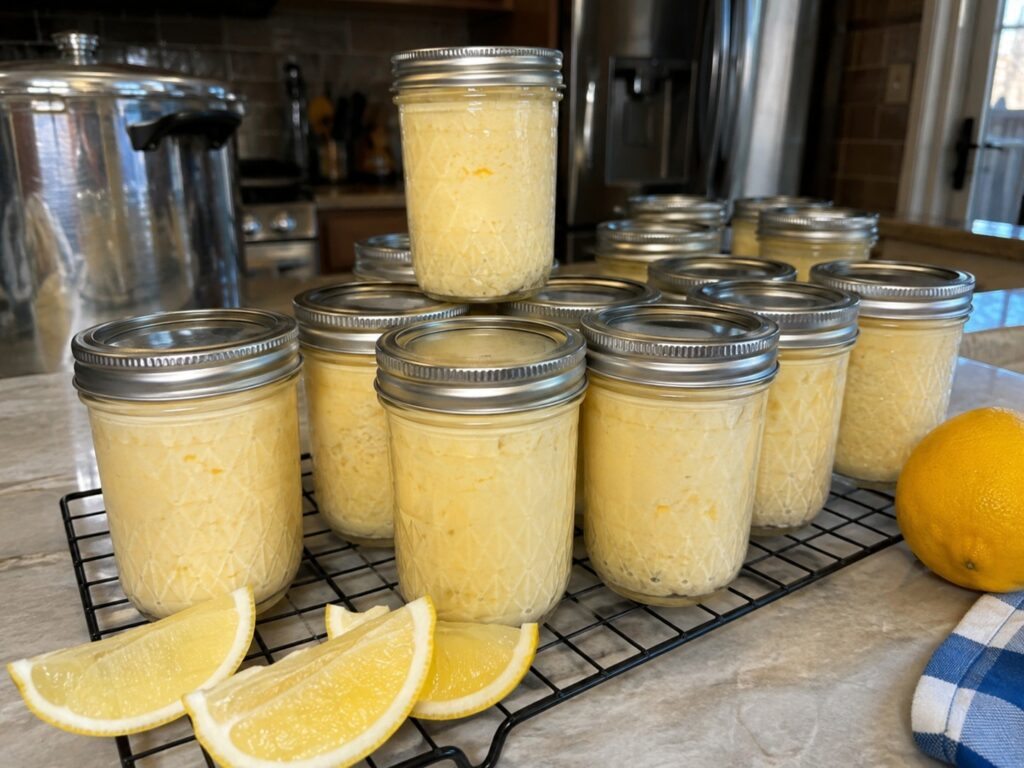
The jars shown in the picture have a beautiful golden lemon-colored mixture that looks perfect for storing homemade citrus spread. The addition of fresh lemon pieces around the jars also gives the whole presentation a bright and refreshing appearance.
When storing homemade lemon curd, refrigeration is important. Because lemon curd contains eggs and butter, it should not simply be sealed in jars and left at room temperature. A sealed jar does not automatically make a homemade food shelf-stable.
Keep the lemon curd refrigerated and use clean utensils when serving it. If you want to keep it for a longer period, freezing is a better option. Portion it into suitable freezer-safe containers, leaving room for expansion, and thaw it in the refrigerator before using.
If you are making lemon curd as a homemade gift, place it into clean decorative jars after it has cooled. Add a label with the name, preparation date, and refrigeration instructions. A simple ribbon and a fresh lemon-themed label can make the jars look beautiful for gifting.
Homemade Lemon Curd is a wonderful recipe for anyone who loves bright citrus flavors. It is rich without being heavy, sweet without losing the natural tartness of lemon, and versatile enough to use in countless ways.
Whether you spread it over toast in the morning, spoon it onto scones, swirl it into yogurt, fill a cake with it, or serve it alongside fresh berries, lemon curd can turn simple ingredients into something truly special.
The combination of fresh lemon juice, fragrant zest, creamy butter, eggs, and sugar creates a smooth and luxurious spread with an irresistible citrus flavor. Once you make it at home, you may find yourself looking for new ways to use it because it is so delicious.
So grab some fresh lemons and give this homemade Lemon Curd a try. Let it cool completely, refrigerate it until thick and creamy, and then enjoy it with your favorite breakfast foods or desserts. A spoonful of homemade lemon curd is enough to brighten almost any dish and bring a little sunshine to the table. 🍋💛