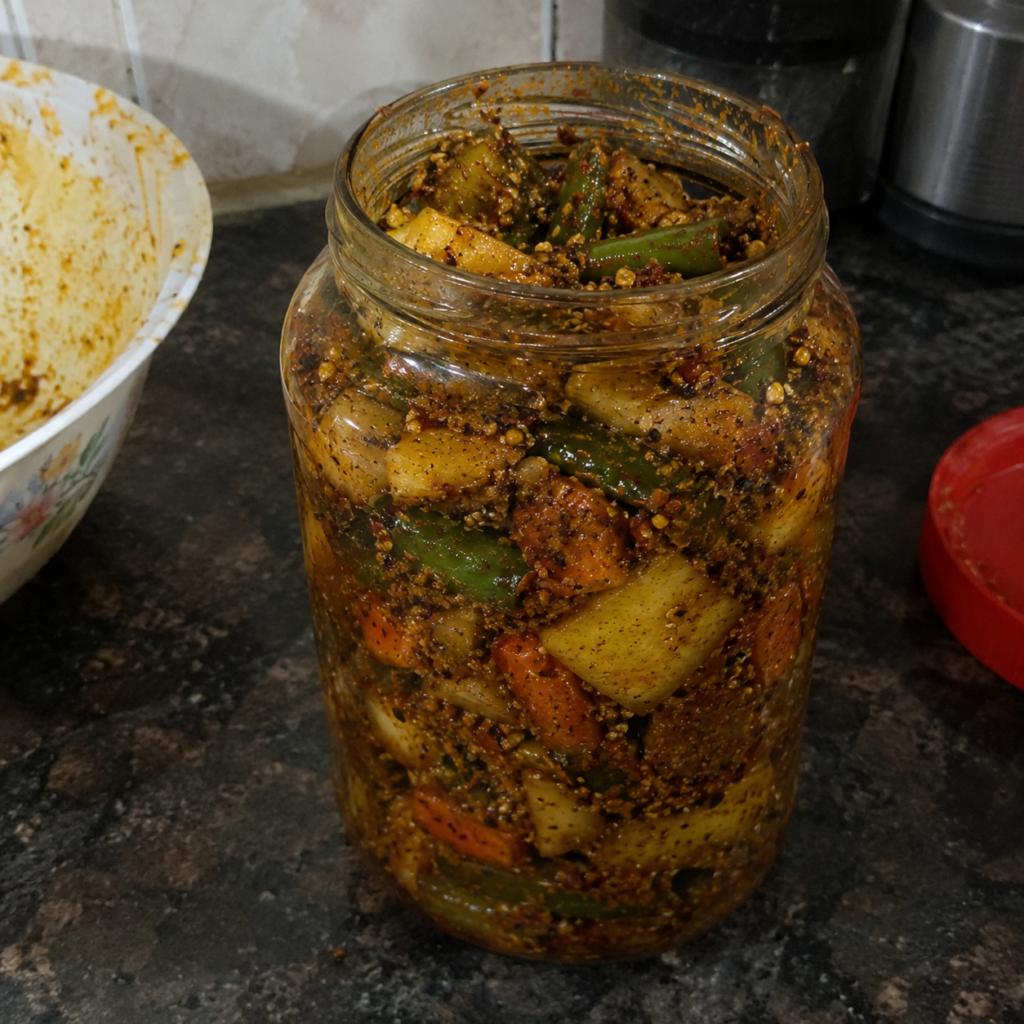

This homemade mixed vegetable pickle is a delicious, spicy, tangy, and flavorful condiment that can instantly make a simple meal more exciting. It is packed with crunchy vegetables, aromatic spices, and a rich mixture of oil that brings all the flavors together. The best thing about making pickle at home is that you can adjust the spice level, tanginess, and salt according to your taste.
This traditional-style mixed vegetable pickle is perfect with rice, roti, paratha, dal, curry, sandwiches, or almost any homemade meal. Once prepared properly and stored in a clean jar, the flavors continue to develop and become even better.
Ingredients
For the vegetables:
- 2 medium carrots, peeled and cut into small sticks
- 2 cups green chilies, cut into pieces
- 1½ cups raw mango, peeled and cut into bite-sized pieces
- 1 cup cauliflower florets
- 1 cup radish, cut into thin pieces
- ½ cup turnip, cut into small pieces
- ½ cup fresh ginger, thinly sliced
- ½ cup garlic cloves, sliced or left whole
For the pickle masala:
- 3 tablespoons mustard seeds
- 2 tablespoons fennel seeds
- 2 tablespoons nigella seeds
- 1 tablespoon fenugreek seeds
- 1 tablespoon cumin seeds
- 2 tablespoons red chili powder
- 1 teaspoon turmeric powder
- 2 tablespoons salt, or according to taste
- 1 tablespoon crushed black pepper
- 1 tablespoon mustard powder
- ½ teaspoon asafoetida, optional
For the oil mixture:
- 1½ to 2 cups mustard oil
- ½ cup vinegar
- 2 tablespoons lemon juice
Preparing the Vegetables
Start by washing all the vegetables thoroughly under clean running water. Since pickles are stored for a longer period, it is important to make sure the vegetables are clean and free from dirt.
Cut the carrots, raw mango, radish, turnip, cauliflower, green chilies, and ginger into similar-sized pieces. Keeping the pieces reasonably uniform helps them absorb the spices evenly.
After cutting the vegetables, spread them out on a clean kitchen towel or large tray. Allow them to dry completely. This step is extremely important because excess water can affect the texture and storage life of the pickle.
Let the vegetables air-dry for several hours. If necessary, you can leave them covered with a clean cloth in a dry place until there is no visible moisture on their surface.
Preparing the Pickle Spices
Place the mustard seeds, fennel seeds, fenugreek seeds, cumin seeds, and nigella seeds in a dry pan.
Lightly toast the spices over low heat for a few minutes. Do not burn them. You only want to warm them until they become fragrant.
Once toasted, remove them from the heat and let them cool completely.
Crush the spices coarsely using a spice grinder or mortar and pestle. Avoid turning them into a completely fine powder. A slightly coarse texture gives homemade pickle a much better taste and texture.
Mix the crushed spices with red chili powder, turmeric powder, salt, black pepper, mustard powder, and asafoetida if using.
Heating the Mustard Oil
Pour the mustard oil into a deep pan and heat it over medium heat.
Allow the oil to become hot, but do not let it smoke excessively. Once heated, turn off the heat and allow the oil to cool slightly.
Heating mustard oil helps reduce its strong raw flavor and gives the pickle a smoother, richer taste.
Let the oil cool until it is warm rather than extremely hot.
Combining Everything
Place all the completely dried vegetables into a large, clean mixing bowl.
Add the prepared pickle spice mixture and toss everything together thoroughly. Make sure the spices coat every piece of vegetable.
Pour in the warm mustard oil and mix again.
Add the vinegar and fresh lemon juice. These provide the characteristic tangy flavor that makes the pickle so delicious.
Use a clean, dry spoon or spatula to mix everything until the vegetables are evenly coated with the spices and oil.
Taste a small amount of the mixture and adjust the salt, chili, or lemon juice if needed.
Filling the Jar
Use a completely clean and dry glass jar with a tight-fitting lid.
Before filling the jar, make sure there is absolutely no water or moisture inside. You can wash the jar thoroughly and allow it to dry completely before use.
Carefully transfer the prepared pickle into the jar. Press the vegetables down gently with a clean spoon so that they are packed properly.
Pour any remaining spiced oil from the mixing bowl over the top. The oil should help coat the vegetables and protect the surface.
Leave a small amount of space at the top of the jar rather than filling it completely to the rim.
Close the jar tightly.
Resting the Pickle
For the best flavor, allow the pickle to rest in a cool, dry place for several days.
During this time, the vegetables absorb the spices and the flavors become deeper and more balanced.
If possible, place the jar in indirect sunlight for a few hours during the day. Avoid exposing it to extreme heat.
Once a day, make sure the vegetables remain coated with the oil. If necessary, use a completely dry and clean spoon to gently mix the pickle.
After several days, the vegetables should become more flavorful and the spices should have fully infused into them.
How to Serve
This mixed vegetable pickle can be served alongside almost any meal.
Try it with hot parathas, chapati, naan, plain rice, pulao, biryani, dal, or vegetable curry. Even a simple bowl of rice and lentils can taste much more exciting with a small spoonful of homemade pickle.
You can also serve it as part of a larger meal with yogurt, salad, and other homemade side dishes.
Because the pickle is spicy and flavorful, a little goes a long way.
Storage Tips
Always use a completely dry spoon when taking pickle from the jar. Water or moisture can reduce its storage life.
Keep the jar tightly sealed whenever you are not serving the pickle.
Store it in a cool, dry place away from direct moisture. For longer storage, refrigeration can also be used.
If you notice an unusual smell, visible mold, bubbling, or any other signs of spoilage, discard the pickle rather than tasti